
G Cup Cup-Shape Matcher: Depth, Edge and Wire Width
Use observations from a bra you have tried — not a body-shape label — to choose the next construction feature worth comparing.
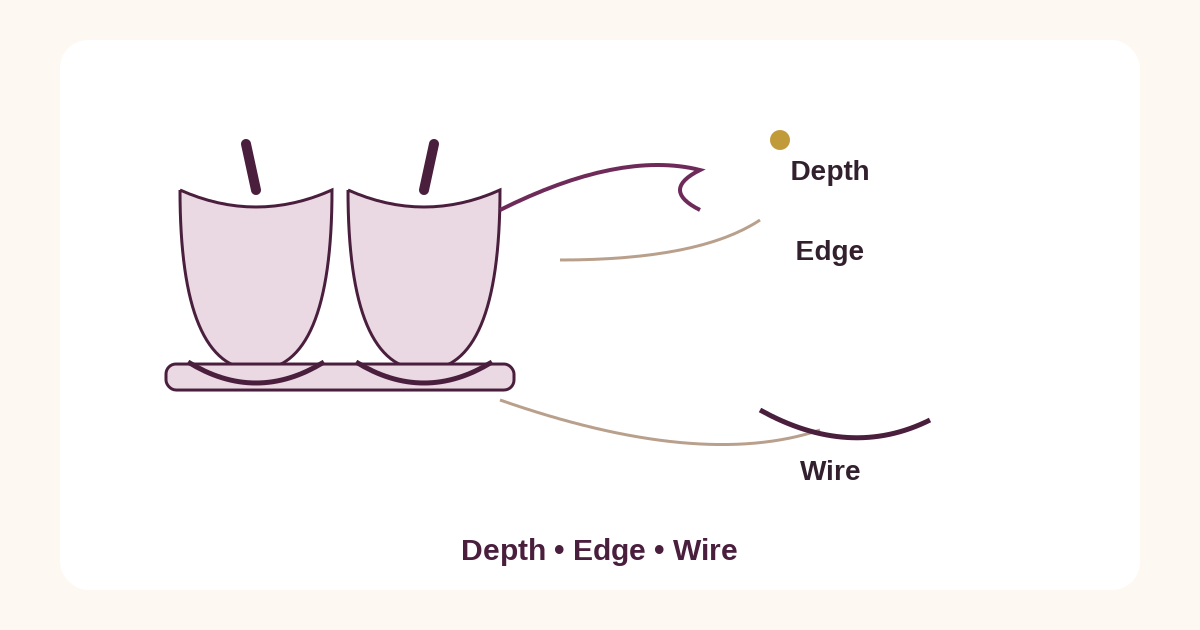
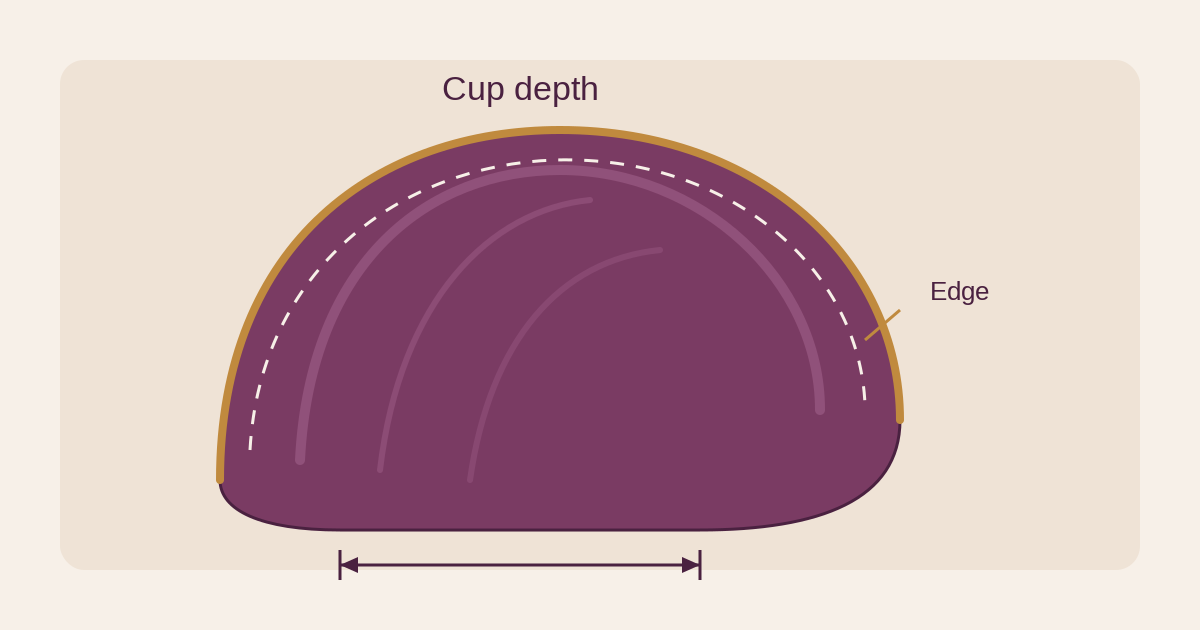
Cup depth, upper-edge shape and wire width can matter independently of cup letter, so the same band and letter can fit differently in two constructions. You do not need a definitive body-shape label to begin: each observation points to one construction comparison.
Cup depth, edge and wire-width matcher
Enter the requested information to get a result for this question.
Your cup depth, edge and wire-width matcher result
How this tool reaches its result
Combine three supported-garment observations into construction features to compare. No size is inferred from an appearance category.
The matcher organises reported fit observations; it cannot diagnose anatomy or certify a bra fit.
Site calculation methods →Projection and cup depth
Select the situation that matches you to see the check relevant to this section.
If a cup is pushed down despite a stable band, investigate room near the base and wire position. A seamed cup can offer a useful comparison to a moulded shape, but construction varies within both categories. Empty space near the base with a cup pushed down points to depth first; compression near the base with the band stable points to room near the wire, not to a smaller band.
Fullness and cup edges
Select the situation that matches you to see the check relevant to this section.
A closed top edge may cut in; a tall or open cup may leave space. Stretch fabric or a different neckline can change that interaction without requiring a different band. Read the edge as a construction question first: cutting at the top edge calls for a more open or stretch upper edge, gaping at the top calls for a lower or shallower upper cup — before changing the letter.
Keep observations provisional
Select the situation that matches you to see the check relevant to this section.
Shape can look different when supported and unsupported. Use the tool to choose features to compare, not to assign a permanent category or calculate a new size from appearance. Record the garment model with each observation, so the same note still means the same thing when you compare the next bra.
Use garment behaviour instead of a fixed body category
Select the situation that matches you to see the check relevant to this section.
Two bras in the same label can put their available room in different places. One may provide more room near the wire, another more height above it. If the wire slides downward while the upper cup remains empty, note both observations before choosing the next construction.
A stretch upper panel may accommodate an uneven upper edge; a lower cup can reduce unused height. Neither feature is a guarantee. Compare one construction change at a time and keep the band reasonably stable so you can understand which difference helped. That is why the tool asks about the garment you tried, not about a body category: the room placement is a property of the bra, and the next comparison follows from where the room sits. If the symptom is a band problem rather than a shape problem, a fit check is the place to start.
Asymmetry and changing fit
Select the situation that matches you to see the check relevant to this section.
It is possible for one side to fit differently from the other. Compare containment on both sides and use strap adjustment gently rather than pulling one side into place. Fit to the side that needs more containment, and adjust the other strap gently; do not size the whole bra to the smaller side. A removable insert or adaptable cup fabric may be useful depending on the garment and your preference.
The shape tool does not assign a permanent identity. Its output is a list of garment features worth investigating based on the fit observations you enter. Revisit those observations when you change activity, construction or size.
Reading the three observations together
Select the situation that matches you to see the check relevant to this section.
The three observations translate into the words other guides use, without becoming a diagnosis or a permanent category. A wire sitting on side tissue, or tissue escaping toward the armpit, points to comparing wider wires with more side coverage. A wire extending well beyond the tissue, or poking under the arm, points to comparing narrower, more U-shaped wires with deeper cups. A cup base that is compressed or pushed down points to comparing more room near the wire — more depth. A base that sits empty while the top gaps points to comparing a shallower or lower cup, not automatically a smaller letter.
Read the observations together, one construction change at a time, with the band stable. A compressed base together with a wire on side tissue means depth and width are both short — change one feature first so you can tell which change helped, rather than changing band, cup and construction at once.
When two observations point different ways, act on them in this order: depth first — whether the cup has room where the tissue sits — then the upper edge — whether it cuts in or gaps — then wire width — whether the wire follows the root. Depth, edge, width, in that order.
Two people can wear the same complete label and need different constructions — one a shallow, open cup, the other a deep cup with side coverage — because the label fixes the difference, not where the tissue sits.
The centre gore is a fourth observation
Select the situation that matches you to see the check relevant to this section.
A wired centre that crowds and never sits flat is a different observation from a centre that presses on the sternum while the straps slip off the shoulder edge. In the first case, compare a lower or narrower gore; in the second, compare a different gore width or strap position. Use the fit checker for the gore check itself — this section names the observation, it does not replace the check.
No root tracing is needed here, and no size is inferred from appearance: the gore observation joins the other three as a garment observation, not as a body category.
How to interpret your cup depth, edge and wire-width matcher result
Select the situation that matches you to see the check relevant to this section.
Combine three supported-garment observations into construction features to compare. No size is inferred from an appearance category.
The matcher organises reported fit observations; it cannot diagnose anatomy or certify a bra fit.
The requested inputs are near the cup base, upper cup edge, wire at the sides. Keep the unit or chart context with the result. Blank inputs are not treated as zero, and unsupported values should be corrected rather than used to produce a convenient-looking answer.
The matcher returns a shortlist that may hold two or three equally likely constructions to compare, not one verdict; compare them one change at a time.
Keep depth, edge and width as separate observations
Select the situation that matches you to see the check relevant to this section.
A narrow wire does not necessarily imply a shallow cup, and a tall cup does not prove that it has room at the base. Describe where pressure occurs and where space remains. The shape tool asks separate questions because those features can vary independently. That independence is the reason the tool asks three separate questions: one observation must not be used to infer the other two.
Start with a stable band so its movement does not obscure the cup observation. If the wire slips below the crease while the top gaps, compare cup depth and height. If the cup edge contains but the wire extends uncomfortably far to the side, compare wire shape while preserving the useful containment. A wire that sits on side tissue points to a wider wire comparison; a wire that extends well beyond the tissue points to a narrower one — judge the wire by where it sits, not by the cup letter.
The output is a shortlist of construction features, not a permanent body classification. A different bra can reveal a different aspect of the fit. Reassess after changing construction and keep the exact garment model with your notes so the observation remains interpretable.
If you are choosing between styles for a new purchase, compare them side by side with the style comparison.
Common questions
Can the shape finder diagnose projection from my measurements?
Which fit locations should I note before changing a bra?
What cannot the shape finder classify?
Sources & method
These named references informed the chart or fit guidance. Find publisher details and source locations in our source register. Worked examples use our documented independent method; they are not product tests or fit guarantees.
Found a chart mismatch or unclear explanation? Tell us which page and sizing system.