
G Cup Style Comparison: Compare Bra Styles Side by Side
Build a practical checklist for everyday, sports, strapless, wireless or swimwear shopping. Start from your size, then compare constructions — the same band and letter behaves differently in each.
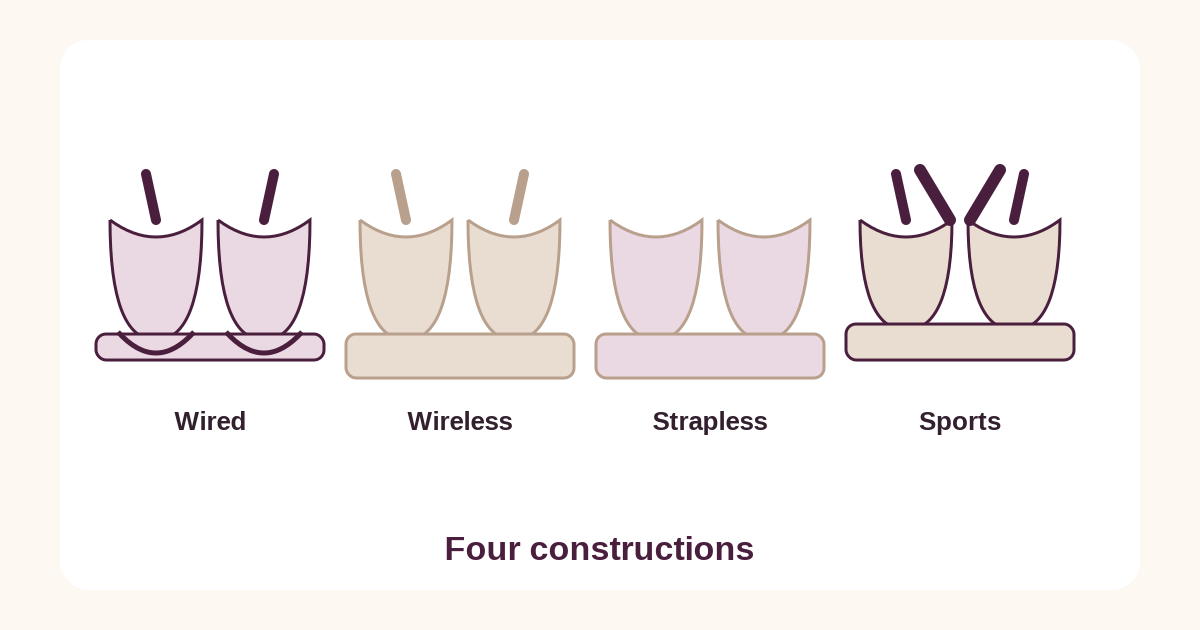
Choose your activity and describe the fit problem you want to solve. The tool suggests construction features and checks, without pretending to know live stock. No single style is best for every G cup: the activity chooses a construction family, and the fit observation chooses the feature to compare inside it.
Build your bra shopping checklist
Starts with a labelled example. Change the inputs below to calculate your own comparison.
Visualise the features for your activity
Changes with the inputs above. This is a garment and label diagram, not a body prediction.
Freya international size chart · Method and limitations. Size labels do not guarantee fit or stock availability.
Start with the job the bra needs to do
An everyday smooth finish, a secure strapless neckline and high-impact movement create different priorities. Decide the use before comparing products and keep the complete size and system visible. An everyday smooth finish asks about cup coverage and seam placement, a strapless neckline asks about band grip and side structure, and high-impact movement asks about containment construction — name the feature, not just the style name, when you compare.
Use the shortlist as questions for a product page
Check closure adjustment, cup construction, actual size options, materials and return conditions. A category advertising G cups can still omit your exact band-and-cup combination. A style name alone does not settle the comparison: two bras sold under the same style name can use different wires, cups and bands, so check the construction features on the actual product page.
How we handle product claims
We do not show invented stock counts, prices or test ratings. These tools select features; retailer pages provide current inventory and transaction details. Product-level rankings require their own dated evidence. We name no best style and no winning product: the checklist exists so you can judge a product page against your own size and observation.
Build a shortlist you can verify
Use the tool’s feature suggestions as a checklist beside a real product page. For sports, examine support construction and adjustment. For a strapless outfit, examine the neckline and band — above all the band’s grip and side structure, since the band carries the job the straps used to do. For everyday wear, decide whether a smooth finish or a flexible cup matters more to you.
Then confirm the exact band-and-cup combination in the selector. A range marketed as D–K can have different limits by band, colour or style. Read any product-specific chart and check whether its labels are UK or US before converting. For movement, sports bras start from your everyday size and check the brand chart. For a bare neckline, the strapless outfit checklist judges the band before the outfit test.
Keep a useful try-on record
Record the complete size, system, construction and the specific movement that revealed a problem. “Band stayed level; cup edge escaped when leaning” is actionable. A generic rating such as “uncomfortable” does not tell you whether to change size, shape or activity-specific design.
If a bra meets your fit needs, note its actual model rather than assuming every bra from the brand will fit the same way. A new model can use a different wire, cup or fabric. That is why the record names the model and the construction, not just the style category. For swimwear, the swimwear pages ask the activity question first. Adhesive options are a separate job from support: the adhesive guide treats coverage and structural support as separate jobs.
Translate a priority into a product-page checklist
Choose the main activity first. A sports priority asks whether the design provides appropriate containment during movement. A strapless priority asks whether the band and cup remain stable without shoulder straps. Wireless comfort changes the structure being assessed, while swimwear introduces closures, water use and sometimes torso length. Read each priority as a construction question: what structure does this activity remove or add, and which feature must take over that job?
Then add the fit observation. A need for more room near the wire is different from a cup edge that cuts in. Read the two parts together: the activity chooses a construction family, while the observation identifies a feature to compare within that family. A strapless priority plus a cup edge that cuts in points to a different comparison than the same priority with a band that slips — keep the two inputs separate when you read the result. Neither part confirms that a particular product is available.
Move from the general finder to the specialised planner
Use the individual sports, strapless, wireless and swimwear pages when you know the construction you want. Their planners ask questions particular to that use. Low-back, longline and torso-length pages also provide simple geometric comparisons where your measured values can support actual arithmetic.
Before buying, confirm the complete band-and-cup label in the product selector and check whether the storefront uses UK or US cups. Save the model, size and one clear fit observation after trying it. That record supports a more informative next comparison than a broad brand preference or a claim that every G cup fits the same way. If the specialised planner’s questions do not match your observation, return to the general finder and change one input at a time — changing both at once hides which change mattered.
If you already have a bra to compare, use the cup-shape matcher: depth, edge and wire width instead of comparing styles from scratch.
Common questions
Where should I start with g cup bra style comparison?
What does g cup bra style comparison leave for an in-person try-on?
Sources & method
These named references informed the chart or fit guidance. Find publisher details and source locations in our source register. Worked examples use our documented independent method; they are not product tests or fit guarantees.
Found a chart mismatch or unclear explanation? Tell us which page and sizing system.