
G Cup Bras for Large Bands: Support and Comfort
Choose a G cup bra in a larger band with practical checks for band tension, cup capacity, closures, shoulder comfort and size availability. Read every label as band, letter and system together.
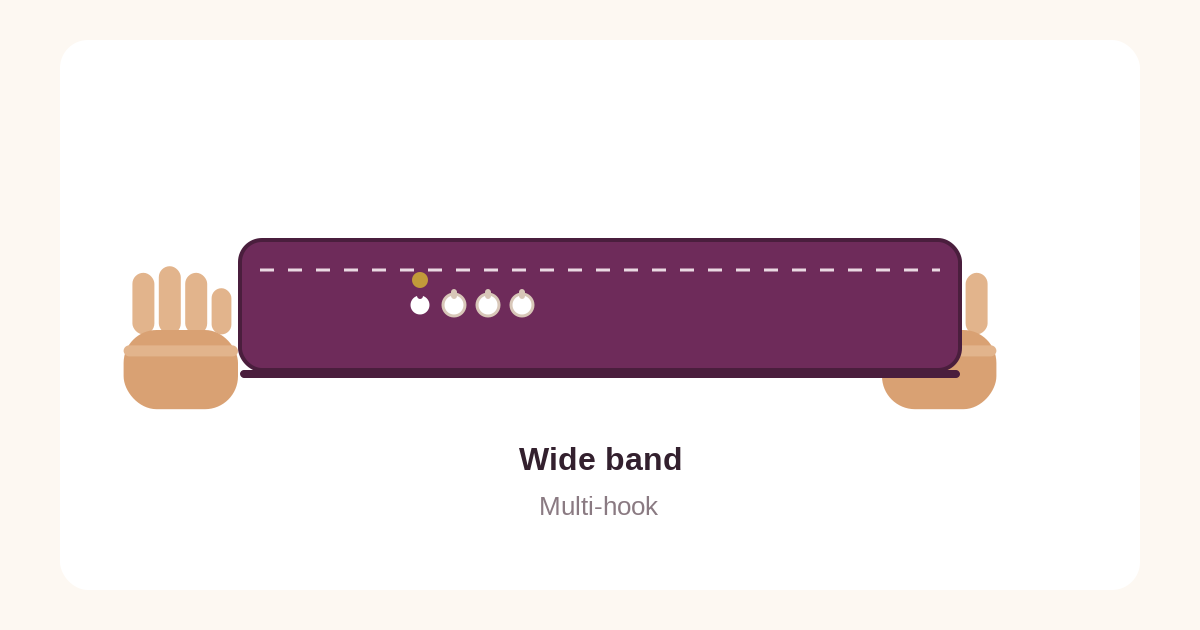
Fit the ribcage and cups independently. A larger band with a G label is not the same cup capacity as a smaller G, and support should not depend on overtightened straps. Judge the band first, on the loosest hook and after movement — raise your arms and sit — before you change the cup letter.
Read the number and letter together
A G cup does not have a fixed volume. Within the same sizing system, a 42G is a different cup capacity from a 34G. Use current measurements and the exact manufacturer chart instead of carrying a familiar letter across band sizes. With the letter held, each two-inch band step adds one nominal capacity step — so a 42G is four capacity steps above a 34G, not the same cup on a wider frame.
If your band size has changed, reassess cup fit rather than automatically choosing the old cup letter. UK and US sequences diverge beyond DD; the chart used here maps UK G to US I. Check the complete size before comparing stock across stores. Record the system with every label you save: ‘42G’ without UK or US is incomplete. At the other end of the band range, the small-band guide starts with the band you actually need.
Find steady tension without painful compression
Try the bra seated as well as standing. The band should remain secure during reaching and normal breathing, with no folding edge that causes pain. A band that rolls may be responding to its depth, stiffness or your torso movement, so a different construction can be more helpful than simply choosing a smaller size. Judge tension on the loosest hook: a band that only holds on the tightest hook has no adjustment left as the elastic relaxes. A band that pulls well away from the back when pulled gently is loose, even if it looks level standing still — compare the adjacent sister down.
For an underwired bra, cups that are too small or shallow can make a correctly sized band feel tight. Compare cup capacity and wire placement before increasing the band. A wireless centre may sit away from the chest; judge containment and comfort rather than applying the wired centre-gore rule. If the wire sits on tissue at the side, the cup — not the band — is the next comparison.
Compare closures, wings and strap placement
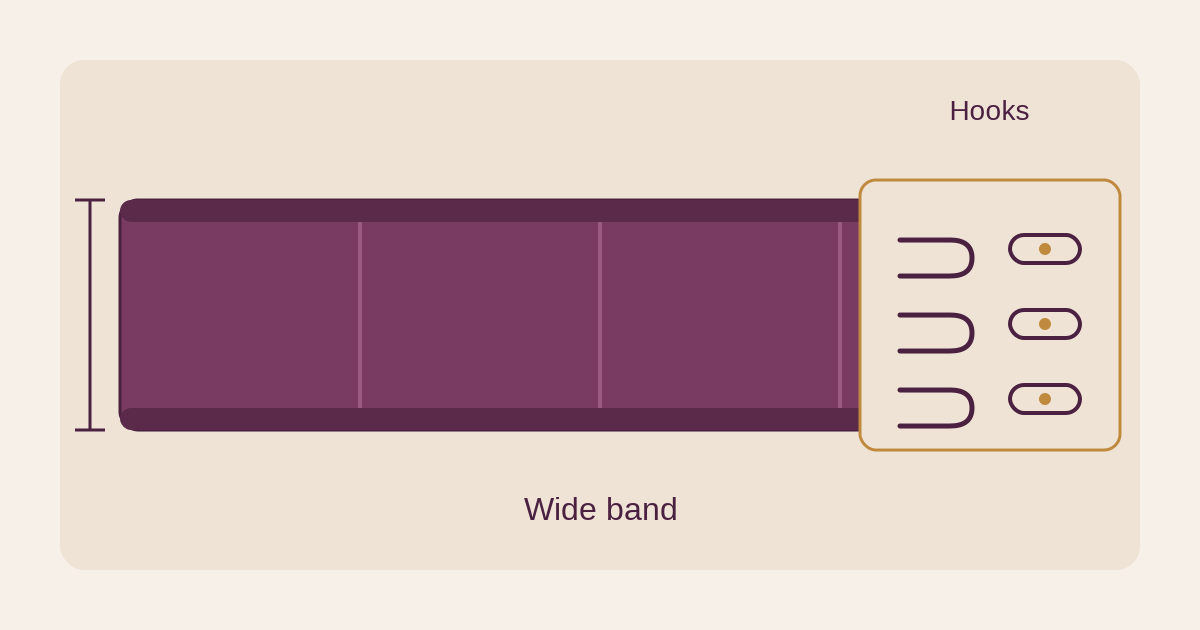
A deeper back band and multiple closure positions offer different tension and coverage options, but hook count alone does not prove support. Inspect how the elastic sits beneath the arm and whether the closure is manageable for your reach and grip. Hook count is a range of adjustment, not a measure of support: judge the band by whether it stays level after movement.
Straps should help position the cups without carrying all the load. If they dig or slip, compare strap placement and adjustment range alongside band stability. Wide straps can spread pressure, but they cannot correct a cup that fails to contain the breast. Straps tightened to rescue a loose band only hide the band question — judge the band before you touch the straps. As the band size rises, strap placement sits farther apart, so slipping straps on a larger band can be a placement consequence of the band itself — compare a band step that insets the straps, or a closer-set strap style, before blaming the strap.
Verify the exact model before ordering
A brand advertising G cups may not make every G in every band. Filter by the complete label, open the model’s size menu and confirm the chart used by that storefront. Ask about substitutions when a desired size is unavailable; a random larger band is not an equivalent replacement. Record the full label — band, letter and system — with every option you compare, so the note still means the same thing when you return to it.
Prioritise a returnable first order and use the same movement checks for every option. Record rubbing, closure comfort and band movement under your usual clothes. Change one thing at a time — same model, adjacent comparison, same band — because changing model and size together hides which change mattered. Persistent pain deserves individual advice instead of increasingly tight support.
Large-band construction and shopping checks
On a larger band, support comes first from the band itself: a wider band, more hook positions and wider straps spread load better than narrow straps tightened to compensate. Check that the band sits level across the back and does not ride up when you raise your arms, and that the centre gore and wires sit flat without pressing into tissue. Support that comes from straps alone fails the movement check: a band that rides up when you raise your arms is the band question, not a strap question.
Do not assume a large band means a small cup, or that a brand range listing includes your exact band-and-cup combination. Verify the exact model, colour and size before ordering, and keep the sister-size rule in mind: going up a band means going down a cup letter to keep a similar cup volume, which changes band support even when volume is similar. Changing the band while keeping the same cup letter is the error to avoid — move the letter with the band, or the comparison tests a different cup volume, not a different band. A sister size is a comparison to try on, not an identical fit: band tension, strap placement and wire width all change with the frame.
Common questions
Does a wider strap fix a loose band?
Does every G cup brand offer large bands?
Sources and scope
Manufacturer charts establish label sequences; fitting resources support garment checks. Construction comparisons are practical guidance, not wear-test results or certified fitting advice.
See the source register, authorship and research standards and calculator method. If something needs correcting, contact us to report a correction.